Business Hours: Mon-Fri, 8am-4:30pm & Sat, 8am-1:00pm, Sunday Closed

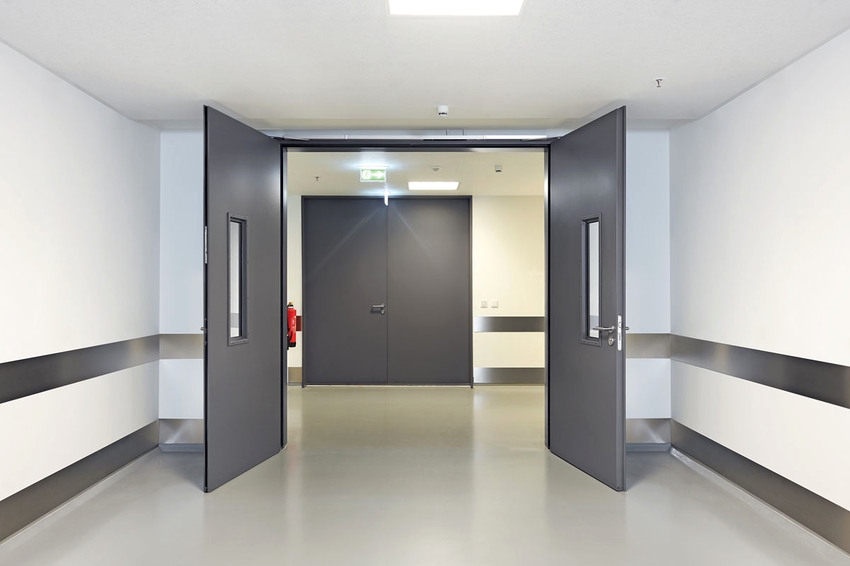
When it comes to building and workplace safety, fire exits play an absolutely critical role.
It is the duty of any safety manager, employer or site manager to ensure that a building is equipped with fire exits, and that they are kept functional, easily accessible and fully usable.
To help you ensure that you are adhering to all legal requirements, and that you are keeping your staff and site visitors as safe as possible, we’ve outlined our comprehensive guide to UK fire safety regulations for fire exits.
So, according to UK law, there is not an exact number of fire exits that you are required to have on your premises.
But, there are still a number of rules and regulations that you need to follow.
Firstly, the law specifies that you must provide at least one fire exit within your premises.
If you fail to provide at least one fire exit, then you can incur a large fine. In fact, if someone on your premises is injured as a result of a fire, and it transpires that you do not have a fire exit in your property, then you could receive a prison sentence.
Secondly, all of your fire doors must be both fire resistant and fire-rated. Otherwise, they are not at the required safety standards.
Although there is no fixed rule about how many fire exits you need, it is highly recommended that you have more than one fire exit in a building. Plus, all of your fire exits should have separate escape routes. This is designed to minimise the risk of a blockade making exits unusable. Plus, it also helps to minimise the potential of a crush as people use the exits in an emergency, and ensures a more efficient, orderly evacuation.
Implementing fire exits and comprehensive fire safety measures is of critical importance, both for your business and for your staff.
The reasons for this include:
In the event of a fire, these safety measures will work to minimise injuries and potential fatalities.
Thereby keeping everyone on site (whether they work there regularly or have only visited the site once) calm, orderly and safe.
With dependable fire safety measures in place, you can reduce the risk of fire causing extensive damage to your property.
With measures such as smoke detectors, fire extinguishers, sprinklers and risk assessments in place, you can keep the risk of fire to the absolute minimum.
With these measures in place, you can ensure that your business, site and your site manager are adhering to all UK fire safety legislation.
Your fire exits need to be clearly marked and easy to follow. You should also make sure that their path is kept permanently free from any obstacles.
This will help you to spot any potential risks or hazards and minimise them, before they cause a bigger problem. You should also regularly review and update your assessment, to ensure that it remains accurate and relevant.
Equip your site with sprinklers and extinguishers, to help those on site to tackle any fires that do occur. To this aim, you also need to ensure that your staff are trained to use the fire safety equipment that you have on site.
By naming a designated individual to take charge in the event of an emergency, all of your employees know exactly who to turn to. This will help to keep your fire safety protocol efficient and well organised.
Keep careful note of any hazardous materials on your site. Then, arrange for their careful storage, in accordance with their specific requirements. You should also train your employees, so that they are also handling and storing these materials safely.
By implementing a reliable system of fire exits and fire safety measures, if an emergency does occur, you can protect your staff, prevent injuries and, ultimately, save lives.
If you would like to find out more about fire exits or improving your warehouse fire safety standards, contact the team at Access Innovations.

In the UK, the entry and exit areas for commercial buildings are subject to stringent legal safety requirements, particularly when it comes to fire safety. These safety laws are designed to ensure dependable and standardised performance in the event of an emergency. They also ensure that key parts of a building – like doors, for […]

Industrial doors are a fantastic, efficient and dependable addition to an industrial site. However, all too often, these units are overlooked until something goes wrong. Even the highest quality industrial doors are at risk of failure, especially if they are not appropriately maintained. Common issues include roller shutters failing to open, automatic doors no longer […]
Read More… from What Is a Pre-Planned Maintenance Contract for Industrial Doors and Do You Need One?

“It’s working fine — why spend money on maintenance?” If your door is working just fine, it’s easy to see why it might be tempting to skip spending money on maintenance. It’s a common mindset. But in reality – especially in commercial premises – if your security doors, roller shutters, or automatic entrances start functioning […]
Read More… from The Hidden Cost of Skipping Annual Door Maintenance
 0800 086 2463