Business Hours: Mon-Fri, 8am-4:30pm & Sat, 8am-1:00pm, Sunday Closed

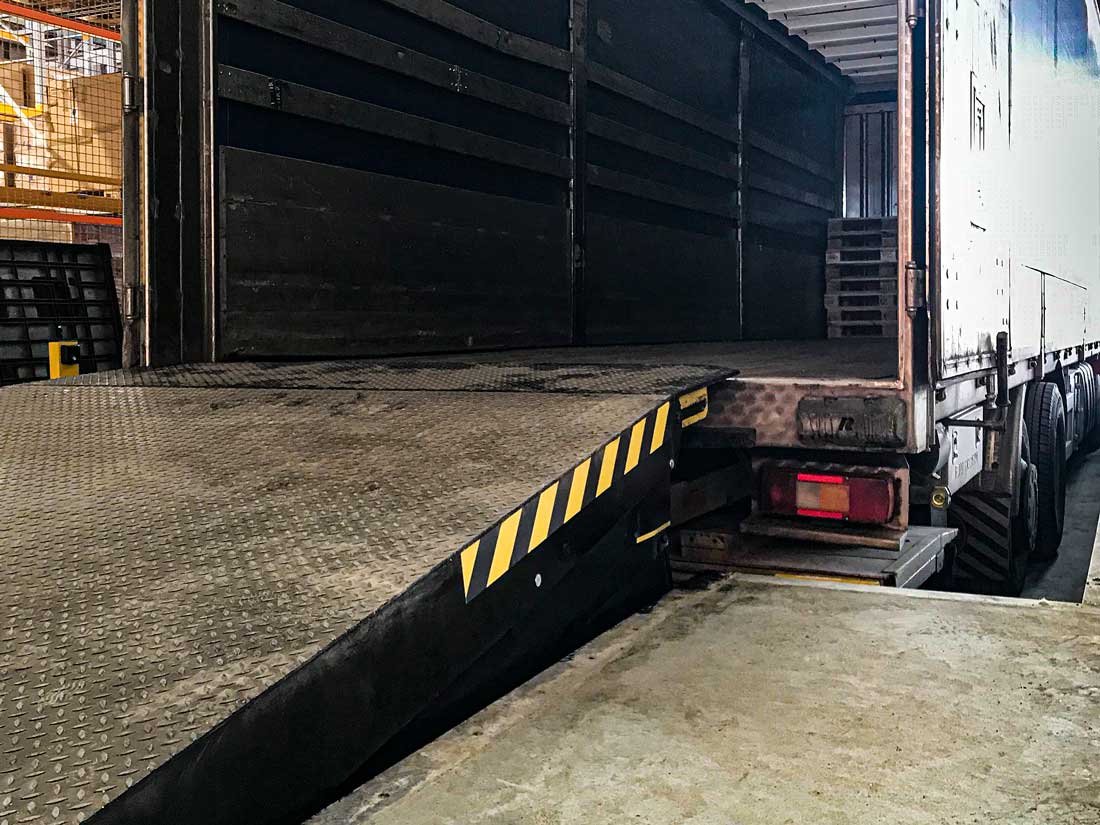
Dock levellers are widely used across different industries, factories and manufacturers, to keep operations as safe and efficient as possible.
There are a wide range of dock levellers out there, each with their own very specific operational benefits and best-fit use cases.
So, to determine which would be the best type of dock leveller for your operations, keep reading.
Below, the team at Access Innovations have outlined what dock levellers are used for, which industries they are most commonly used in, and listed the three main types of dock levellers, along with their benefits.
Dock levellers are used to assist the loading and unloading of items at loading docks, by bridging the height and gap between the truck or trailer and the dock.
As such, these mechanical devices are designed to make it easier, safer, smoother and more efficient to move heavy goods. They help teams to streamline their loading and unloading processes, and make this step faster and more organised.
Plus, they mean that teams no longer have to lift these heavy items manually, thereby significantly reducing the risk of injuries.
At the same time, dock levellers are also used to help better protect the goods being transported, as they reduce the risk of damage or dropping occurring during loading or unloading.
Dock levellers are used across a wide range of different industries, to keep the process of loading and unloading as efficient and safe as possible.
The main industries that commonly use dock levellers include:
The three main types of dock levellers are telescopic, automatic and manual.
Below, we’ll look at the best use case for each type of dock leveller, plus the specific pros and cons of each.
Telescopic dock levellers are specifically designed to offer a more flexible alternative to standard dock levellers.
They are made up of a series of extending and retracting nested sections. This means that they can successfully work with trucks at a wide variety of bed heights.
As a result, the best uses for telescopic dock levellers include logistics and distribution centres, freight and transport hubs, and e-commerce fulfilment centres.
The pros of telescopic dock levellers:
The cons of telescopic dock levellers:
Automatic dock levellers use either motorised or hydraulic mechanisms, to adjust the height and angle of the dock leveller automatically. This means that the machine automatically sets itself to the required height for the specific truck bed that you are working with.
This high level of efficiency and automatic adjustment capacity means automatic dock levellers are commonly used in situations where access to the loading and unloading area might be restricted.
For example, automatic dock levellers are ideally suited for loading and unloading in high security facilities. Or, in facilities with extensive safety requirements, such as food and beverage manufacturing sites, or businesses in the pharmaceutical industry.
The pros of automatic dock levellers:
The cons of telescopic dock levellers:
Manual dock levellers are traditional dock levellers, which operate manually.
Most manual dock levellers work through a pull chain or manual hydraulic pump, which facilitates the movement of the leveller.
Because of its manual operation, manual dock levellers are best used in environments which only have a simpler loading and unloading process.
This includes, for example, smaller businesses (which have lighter load requirements) and low-maintenance environments, with low-to-medium levels of traffic. Or, if the facility only works with trucks at a consistent bed height, then manual dock levellers can provide a convenient option.
The pros of manual dock levellers:
The cons of manual dock levellers:
At Access Innovations, our team install, maintain and repair dock levellers across the West Midlands and the surrounding areas.
We are trusted by businesses throughout the region, and have established a long-standing reputation for the professionalism, efficiency and comprehensiveness of our services.
So, if you have any further questions about dock levellers, or how they can be used to enhance your specific operations, don’t hesitate to get in touch.

Industrial doors are a fantastic, efficient and dependable addition to an industrial site. However, all too often, these units are overlooked until something goes wrong. Even the highest quality industrial doors are at risk of failure, especially if they are not appropriately maintained. Common issues include roller shutters failing to open, automatic doors no longer […]
Read More… from What Is a Pre-Planned Maintenance Contract for Industrial Doors and Do You Need One?

“It’s working fine — why spend money on maintenance?” If your door is working just fine, it’s easy to see why it might be tempting to skip spending money on maintenance. It’s a common mindset. But in reality – especially in commercial premises – if your security doors, roller shutters, or automatic entrances start functioning […]
Read More… from The Hidden Cost of Skipping Annual Door Maintenance
Automatic doors are now a staple feature in commercial sites. They feature across all types of commercial buildings, and sites of all sizes, use cases and requirements. This is because automatic doors offer a huge range of invaluable benefits. Not only do they make sites accessible for visitors with different needs, but they are also […]
Read More… from Automatic Doors Guide: Different Types & Benefits for Commercial Use
 0800 086 2463