Business Hours: Mon-Fri, 8am-4:30pm & Sat, 8am-1:00pm, Sunday Closed

Roller shutters are a widely used security solution, which is immensely popular amongst property owners. Not only do roller shutters significantly increase the security standards of a property, but they are remarkably easy to use, highly durable, and offer a sleek, modern aesthetic.
But, in the majority of cases, UK councils will require the completion of an application and approval process, before exterior shutters can be installed.
This means that, if you want to install roller shutters in your property, you will need to check whether your local council requires you to request planning permission. To find out more about this process and what the next steps will look like, see our experts’ full guide to roller shutters planning permission below.
The regulations and planning permission requirements for roller shutters vary from region to region. They will depend on the local council and its specific legislation.
So, to find out more about the requirements in place in your area, visit your local council’s website. In the majority of areas of the UK, the installation of roller shutters will require planning permission and approval.
When evaluating whether or not to grant planning permission, the following aspects of your proposed roller shutters will be considered:
If your roller shutters offer a high degree of security (and act as a deterrent to crime), are of a high quality and unobtrusive design, and your property is not listed, then it is unlikely that your council will refuse planning permission.
At Access Innovations, our team of roller shutter suppliers and installers will work closely with you, to offer specific guidance for your property. They will help you to find a best-fit solution, and support you through the planning permission process. Contact us for a quote!
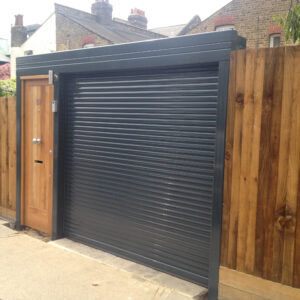
When it comes to updating existing roller shutters, planning permission requirements will be dependent on the nature of the change, what you are replacing your existing roller shutters with, and if the intended purpose of the roller shutters changes.
In some cases, updating your roller shutters could be classed as within ‘permitted development rights’. If so, then you may not need planning permission for the update.
Permitted development rights are planning rules, which allow certain minor developments and changes to take place without the need for planning permission. These are designed to give property owners greater flexibility when making small alterations.
But, it is important that you confirm – either with a roller shutter specialist or your local authorities – whether or not your intended update falls under this classification.
When updating your roller shutters, the associated requirements will be determined by the following:
Again, these regulations vary between local authorities, so you will need to check what specific requirements your local council has in place.
If you are uncertain about any of these regulations or requirements, we recommend speaking to a specialist.
In the case of new developments, the key requirements that you will need to consider include:
Furthermore, these will vary considerably, depending on the nature and purpose of the building, as well as its location and the specific requirements of your local council.
If you are adding roller shutters to a new development, then we highly recommend consulting with a professional. This could either be an architect, a planning consultant, or a roller shutter specialist. They will be able to advise you further about the requirements you need to meet, and how you can ensure that your project complies with all of the above.
Roller shutters can also be installed internally. One of the biggest benefits of internal roller shutters is that they do not require planning permission.
This is because internal shutters do not affect the property’s exterior – or the local area, or any of the surrounding properties – in any way. So, planning permission is not a requirement.
So, if your request to install external roller shutters has not been approved, then you may find that internal roller shutters present an alternative solution, which still unlocks many of the same key benefits.
If you have any further questions about the UK regulations surrounding roller shutters, or you would like to arrange the supply and installation of new roller shutters for your property, contact our team today!

Industrial doors are a fantastic, efficient and dependable addition to an industrial site. However, all too often, these units are overlooked until something goes wrong. Even the highest quality industrial doors are at risk of failure, especially if they are not appropriately maintained. Common issues include roller shutters failing to open, automatic doors no longer […]
Read More… from What Is a Pre-Planned Maintenance Contract for Industrial Doors and Do You Need One?

“It’s working fine — why spend money on maintenance?” If your door is working just fine, it’s easy to see why it might be tempting to skip spending money on maintenance. It’s a common mindset. But in reality – especially in commercial premises – if your security doors, roller shutters, or automatic entrances start functioning […]
Read More… from The Hidden Cost of Skipping Annual Door Maintenance
Automatic doors are now a staple feature in commercial sites. They feature across all types of commercial buildings, and sites of all sizes, use cases and requirements. This is because automatic doors offer a huge range of invaluable benefits. Not only do they make sites accessible for visitors with different needs, but they are also […]
Read More… from Automatic Doors Guide: Different Types & Benefits for Commercial Use
 0800 086 2463