Business Hours: Mon-Fri, 8am-4:30pm & Sat, 8am-1:00pm, Sunday Closed

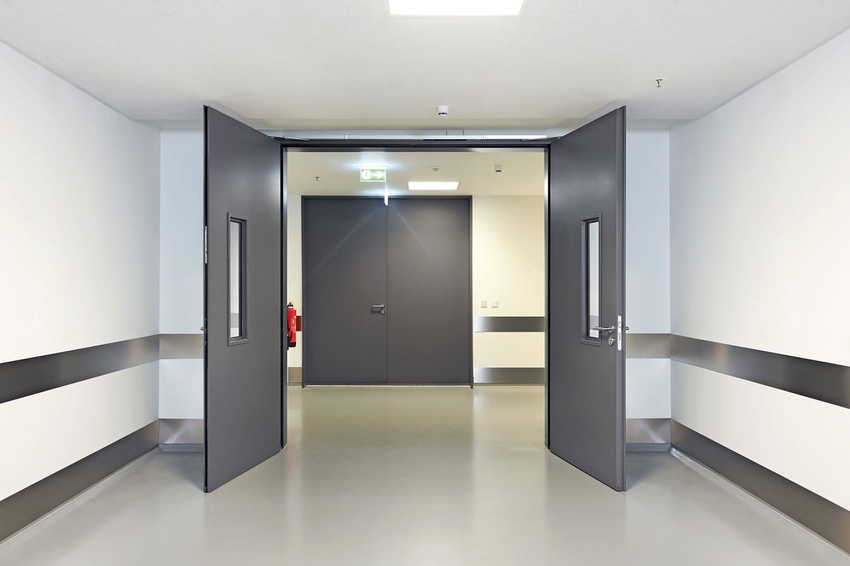
New fire safety guidance comes into force on 1st October 2023, and this applies to all building across the UK. New regulations also target fire doors.
Section 156 of the Building Safety Act 2022 (BSA) makes a number of amendments to the Regulatory Reform (Fire Safety) Order 2005 (FSO) to improve fire safety in all buildings regulated by the FSO.
Phase 3 further strengthens fire safety in all FSO regulated premises by:
Fire doors are an important part of any fire strategy, they minimise fires from spreading through a building, allowing people time to escape and the fire brigade time to attend and save life’s along with your property.
Here at Access Innovations, we can carry out fire door inspections and testing, to ensure you are fully compliant with all current fire safety regulations. We cover businesses and individuals across Birmingham, Coventry and the surrounding areas.
So if you own a large building, an office, warehouse, block of flats, or any building that has fire doors, ensure they are fully compliant with help from our team – contact us today to arrange an appointment.
All fire doors should meet fire safety standards, the door must be a minimum of FD30, offering at least 30 minutes fire resistance and tested in accordance to BS476: part 22 1987 or BS EN 1634 – 1 2000.
Every part of the fire door will need to offer 30 minutes of fire protection, parts include:
Responsible people such as building owners and other persons having control of the premises such as building managers are required by law to make sure premises reach required standards of fire safety regulations 2022. Any breach of the regulations is a criminal offence.
Fire doors must be used to form the compartmentation of your premises. Including all doorways leading to escape routes.
Additional benefits of fire doors include added security, durability, quality, and extra soundproofing!
If you want more information on our fire door inspection and testing services, contact us for a quote, and to book an appointment today.
If you’re looking to improve vehicle access control at your site, one of the first decisions you’ll need to make is whether you should install an automatic barrier or a gate. Generally, rising arm barriers are the best choice for sites where fast, regular traffic flow is the priority. In comparison, gates are a better […]

In the UK, the entry and exit areas for commercial buildings are subject to stringent legal safety requirements, particularly when it comes to fire safety. These safety laws are designed to ensure dependable and standardised performance in the event of an emergency. They also ensure that key parts of a building – like doors, for […]

Industrial doors are a fantastic, efficient and dependable addition to an industrial site. However, all too often, these units are overlooked until something goes wrong. Even the highest quality industrial doors are at risk of failure, especially if they are not appropriately maintained. Common issues include roller shutters failing to open, automatic doors no longer […]
Read More… from What Is a Pre-Planned Maintenance Contract for Industrial Doors and Do You Need One?
 0800 086 2463